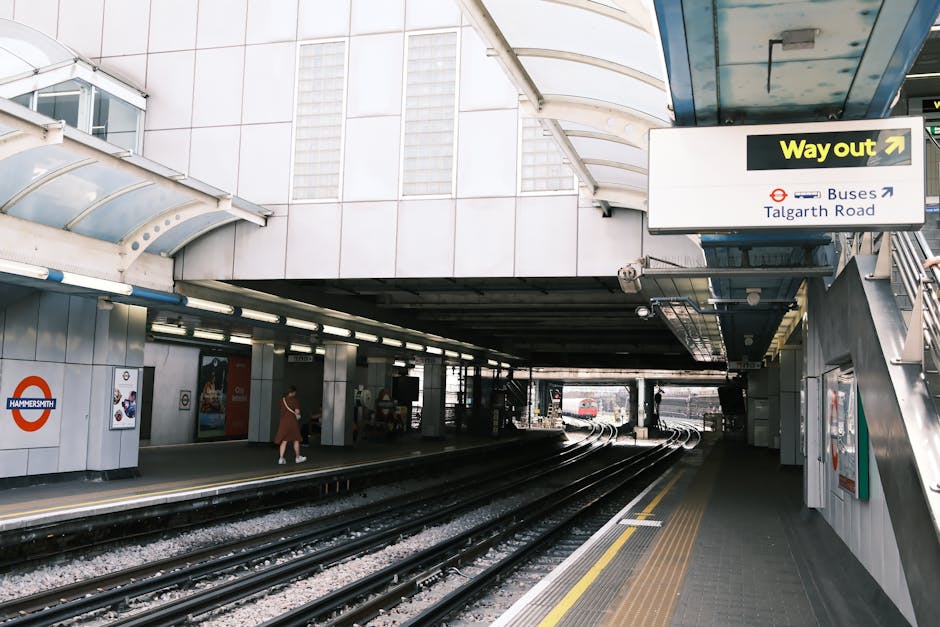
Farringdon station rubbish collection options for commuters
If you commute through Farringdon, you already know the pattern: a busy platform, a fast walk, a coffee in one hand, and a bag of stuff in the other. Sometimes that bag is not just a bag. It might be a broken charger, old paperwork, a cardboard box from a flat move, or the last pieces of clutter you meant to deal with weeks ago. That is where Farringdon station rubbish collection options for commuters come in. The challenge is simple enough, but the fix needs to be practical, quick, and not awkward. In this guide, we will walk through the realistic options, what works best in a commuter routine, and how to avoid the usual headaches.
Let's face it, nobody wants to drag waste across the City at rush hour. You want a clean exit, a sensible plan, and a way to get on with your day. This article breaks down how rubbish collection near Farringdon can work around your schedule, what to check before you book, and which types of waste are easiest or trickiest to handle.
Table of Contents
- Why Farringdon station rubbish collection options for commuters Matters
- How Farringdon station rubbish collection options for commuters Works
- Key Benefits and Practical Advantages
- Who This Is For and When It Makes Sense
- Step-by-Step Guidance
- Expert Tips for Better Results
- Common Mistakes to Avoid
- Tools, Resources and Recommendations
- Law, Compliance, Standards, or Best Practice
- Options, Methods, or Comparison Table
- Case Study or Real-World Example
- Practical Checklist
- Conclusion
- Frequently Asked Questions
Why Farringdon station rubbish collection options for commuters Matters
Farringdon is one of those places where time disappears fast. Trains arrive, bikes glide past, office workers spill out onto pavements, and everything feels tightly scheduled. If you are carrying waste, even a small amount, it can become a real inconvenience. The issue is not just tidiness. It is about fitting disposal into a commute without turning one small errand into a whole evening project.
For commuters, rubbish collection options matter because they solve a specific problem: where do you put waste when your day is already packed? A commuter might need to dispose of packaging from a move, office paperwork, an old office chair, or a few household items after clearing a shelf. The right service saves time and removes the guesswork. That is especially useful if you are moving between a home, a workplace, and a station with very little slack in between.
There is also a bigger practical point. Waste left hanging around tends to grow. One bag becomes three. One broken item becomes a small pile. Before long, it is in the way. Having a reliable collection option near Farringdon helps keep your home, flat, or office under control without losing a whole Saturday to sorting and lifting.
Expert summary: The best rubbish collection option for a commuter is usually the one that fits around a train timetable, handles the right type of waste, and reduces the need for multiple trips. Convenience matters, but so does correct disposal.
How Farringdon station rubbish collection options for commuters Works
In practice, rubbish collection for commuters around Farringdon usually falls into a few broad patterns. Some people need a one-off collection after a clear-out. Others need regular disposal support for an office, a flat, or a shared space. And some just need a fast, simple way to get bulky waste out of the way before the next working day begins.
The process is usually straightforward. You identify what needs removing, check whether any items need special handling, agree a collection time, and make sure access is easy. That last part matters more than people expect. A good collection is often decided by the small details: can the team get to the item easily, is there lift access, is there a loading point nearby, and do you need a narrow time slot because your commute is tight?
If you are clearing out a flat near the station, a business near the office district, or a shared building with limited storage, a service such as waste removal can be the simplest route. For office waste, confidential paperwork, or bulky desks and chairs, a more focused option like office clearance may be a better fit. And if your waste is a mix of general items, furniture, and awkward bits that do not suit a bin bag, then a broader collection plan usually makes more sense than trying to separate everything yourself.
One thing you will notice in busy central London locations is that timing is everything. A collection arranged for early morning can feel much smoother than one squeezed into the middle of a packed evening rush. Not always, but often. The quieter the access, the less stress all round.
Key Benefits and Practical Advantages
The biggest benefit is obvious: you save time. But the real value goes a bit deeper than that.
- Less hassle before or after work: you do not need to haul waste on the train or store it at home for days.
- Better use of limited space: commuters often live in smaller flats, so clutter shows up quickly.
- Safer handling of heavy or awkward items: bulky furniture, appliances, and mixed waste are easier to manage with help.
- More predictable scheduling: a planned collection is easier than making repeated dump-run attempts that never quite happen.
- Cleaner property and less visual clutter: it is surprising how much calmer a room feels once the waste is gone.
There is another benefit that is easy to overlook: peace of mind. If you are leaving the office in a rush or getting home late, the last thing you want is to wonder whether that pile of rubbish is going to sit there until next week. A collection option gives you a line under the task. Done. Sorted. Move on.
For businesses around Farringdon, especially those with fast turnover and slim storage space, commercial options can be especially helpful. A service such as business waste removal can support ongoing waste disposal without disrupting staff or visitors. It is not glamorous, obviously, but it keeps things moving.
Who This Is For and When It Makes Sense
These rubbish collection options are not just for one type of commuter. They make sense for a few different groups:
- Office workers who need to clear small or bulky items during a working week.
- Flat residents near Farringdon who do not have easy access to a car or refuse storage.
- People moving home and trying to avoid leaving a trail of cardboard, broken furniture, and packaging behind them.
- Landlords and letting agents dealing with post-tenancy rubbish or partial clear-outs.
- Small businesses with surplus furniture, archived files, or general waste build-up.
It makes sense when you are short on time, when the items are too large for normal bins, or when the mess is becoming a nagging background problem. You know the feeling: every time you walk past it, you think, "I need to deal with that." Then the day fills up again.
Some commuters also use collection services after seasonal office tidies or household resets. January tends to feel like a fresh start. September too, oddly enough. The stationery is new, the weather is changing, and people suddenly notice the pile in the corner. Human beings are funny like that.
Step-by-Step Guidance
- List what needs removing. Write down each item type: general rubbish, boxes, furniture, electricals, confidential paper, or mixed waste.
- Separate what needs special handling. Some items, like fridges, hazardous waste, or electronics, should not be lumped in with general rubbish.
- Check access. Note lift availability, floor level, parking restrictions, and whether collection can happen without disrupting neighbours or colleagues.
- Pick the right service type. For a simple mixed load, broad rubbish removal may be enough. For a bigger declutter, a more targeted service such as flat clearance or house clearance may suit you better.
- Get a price estimate. Check what is included, what counts as extra, and whether lifting, loading, and disposal fees are part of the quote.
- Book a time that fits your day. For commuters, the sweet spot is often early morning or a lunch window, though that depends on access.
- Prepare the items before collection. Put waste in one place if possible. The cleaner the handover, the faster the job.
- Confirm restrictions on item types. If you have appliances or special waste, book the right disposal route in advance. It avoids the awkward "we can't take that" moment.
A small tip from real-life experience: if you are doing this from a station-adjacent office or flat, try to remove one layer of friction before collection day. Clear a corridor. Unlock the gate. Tell reception. Tiny things, but they matter.
Expert Tips for Better Results
To get the most out of rubbish collection near Farringdon, think in terms of speed, access, and sorting. Those three things control most of the outcome.
- Bundle waste by type if you can. Mixed loads are fine, but separating obvious items helps everyone move faster.
- Keep fragile and confidential materials out of open piles. Paper records may need secure disposal, and broken glass should be boxed safely.
- Measure bulky items roughly before booking. A sofa or wardrobe can take more space than it looks like it will. Annoyingly common.
- Use a collection that matches the job. For example, furniture disposal is a better fit than general rubbish collection if the main issue is one or two large pieces.
- Ask about recycling. If the service sorts recyclable materials, that can make a real difference to what happens after pickup.
It also helps to think about the journey of the waste after collection. That is not just a nice extra. It is part of choosing responsibly. A provider with a clear approach to sorting and reuse, such as the information set out on recycling and sustainability, is usually worth a closer look.
One more practical point: if you are clearing out during a busy commute week, do not leave the booking until the last minute unless you enjoy pressure. Some people do, but most of us do not.
Common Mistakes to Avoid
Most problems are avoidable, which is good news. The annoying part is that the same mistakes crop up again and again.
- Assuming all waste is treated the same. It is not. Some materials need specialist handling.
- Underestimating access issues. A narrow stairwell or lack of loading space can slow everything down.
- Mixing restricted items into a general load. This can create delays or extra charges.
- Choosing a service only on price. Cheap is not always cheap if the job is badly matched.
- Forgetting to check collection timing against your commute. You do not want to miss a train because you stayed to supervise a pickup you could have planned better.
- Leaving sorting until the collection crew arrives. That is a classic time sink.
Another mistake is assuming that an ordinary bin solution will somehow solve a bulky or mixed load. It will not. A broken desk does not become less broken by waiting beside the bin room for a week. Sadly.
Tools, Resources and Recommendations
You do not need fancy tools to organise rubbish collection around Farringdon, but a few simple things make life easier.
- Phone notes or a quick inventory list: useful for keeping track of what needs to go.
- Measuring tape: helpful for furniture and appliance clearance.
- Bin bags, boxes, and tape: basic, but still the backbone of a tidy clear-out.
- Labelled piles or sticky notes: especially useful in shared flats or offices.
- Photo references: a quick set of pictures often helps when getting a quote.
When choosing a provider, look for a clear explanation of what happens next, how collections are arranged, and how payment is handled. Pages like pricing and quotes, payment and security, and book online can help you understand the practical side before you commit.
If you are clearing a property rather than just a few bags, services such as home clearance, loft clearance, or even furniture clearance may give you a neater fit. That is often the difference between a tidy, efficient job and a half-finished one.
Law, Compliance, Standards, or Best Practice
Waste disposal in the UK should always be handled responsibly, especially if the waste comes from a business or contains items that may need special treatment. The practical rule is simple: use a service that can handle the waste type properly, keep records if needed, and avoid handing waste to anyone who cannot explain where it goes.
For commuters and business users in central London, it is also sensible to think about health and safety, access, and environmental handling. That means making sure heavy items are moved safely, electrical items are dealt with appropriately, and anything potentially hazardous is separated. If you are unsure, ask before collection. Better a slightly awkward question now than a much bigger problem later.
Best practice also means knowing what should not be mixed into ordinary rubbish. Fridges, some appliances, confidential documents, and hazardous materials need a proper route. Services like fridge and appliance removal, confidential shredding, and hazardous waste disposal exist for exactly that reason.
If you are using a provider, it is also sensible to review their own standards on safety and responsibility. Pages such as health and safety policy, insurance and safety, and complaints procedure can tell you a lot about how they work when things are not perfectly straightforward, which is often where the real test lies.
Options, Methods, or Comparison Table
There is no single "best" rubbish collection option for every commuter. It depends on the type of waste, the urgency, and how much lifting you want to avoid.
| Option | Best for | Advantages | Potential drawbacks |
|---|---|---|---|
| General rubbish collection | Mixed bags, small clear-outs, everyday clutter | Fast, simple, flexible | May not suit bulky or specialist waste |
| Flat clearance | Rented flats, move-outs, end-of-tenancy clear-ups | Good for larger mixed loads | Needs better planning and access |
| Office clearance | Desks, chairs, paperwork, surplus office items | Efficient for business settings | Not ideal for one tiny item |
| Furniture disposal | Sofas, beds, wardrobes, broken seating | Handles bulky items safely | May be unnecessary for light household rubbish |
| Specialist appliance removal | Fridges, white goods, appliances | Safer for regulated items | Requires correct booking |
If your waste is mostly general clutter, keep it simple. If it is mostly furniture, choose a furniture-led option. If it is a proper clear-out, do not force it into a general rubbish category just because that feels easier. It rarely is.
Case Study or Real-World Example
Here is a realistic example. A commuter working near Farringdon has been living with a half-finished flat clear-out for two weeks. There is a flat-pack wardrobe box in the hallway, an old office chair in the spare room, and a few bin bags full of mixed clutter from a cupboard sort. Every weekday morning, they step over it on the way out. Every evening, they come back too tired to tackle it.
Instead of trying to force it into a weekend trip to a recycling centre, they book a collection that fits their commute. They sort the items the night before, move everything into one access point, and make sure the building manager knows the time window. The collection is handled in one visit, and the flat immediately feels bigger. Nothing dramatic. Just noticeably easier to live in.
That kind of result is common. The point is not to create a perfect clearing experience. The point is to remove friction. Once that happens, the pressure drops fast. You feel it the moment you walk in and there is space again. A small win, but a good one.
Practical Checklist
- List all waste items before booking.
- Separate general rubbish from specialist waste.
- Measure bulky items roughly.
- Check access, lifts, and loading restrictions.
- Choose the right collection type for the load.
- Confirm timing around your commute.
- Ask about recycling and disposal handling.
- Keep confidential items out of mixed waste.
- Review pricing, payment, and terms before confirming.
- Prepare the items so collection can happen quickly.
If you are dealing with a bigger clear-out, you may also want to consider house clearance or flat clearance rather than treating the job as simple rubbish removal. That little choice can save a lot of time.
Conclusion
For commuters, the best rubbish collection option near Farringdon is the one that works around real life: limited time, busy access, and a need to keep things moving. Whether you are clearing a flat, handling office clutter, or getting rid of a few awkward items after work, the right approach should feel straightforward rather than disruptive. That is the real test.
Think in terms of fit. Fit for the waste type, fit for your schedule, and fit for the space you are dealing with. If you get those three things right, the whole process becomes much easier. And honestly, that is what most people need: less fuss, less lifting, fewer unfinished jobs hanging around in the corner.
Get a free quote today and see how much you can save.
And once the rubbish is gone, the day tends to feel lighter. Strange how often that happens.
Frequently Asked Questions
What are the main rubbish collection options for commuters near Farringdon station?
The main options are general rubbish collection, flat clearance, office clearance, furniture disposal, and specialist appliance removal. The best choice depends on what you need to get rid of and how quickly you need it gone.
Is it better to book rubbish collection before or after work?
That depends on access and your commute. Early morning often works well for offices and flats, while a post-work slot can be easier if you need to prepare the area first. The important part is choosing a time you can actually manage.
Can I mix household rubbish with furniture in one collection?
Often yes, but it depends on the provider and the item types. If the load is mainly furniture, a furniture-led service may be more suitable. Mixed loads are common, though, and usually manageable with the right booking.
What should I do with broken appliances or fridges?
Do not put them into ordinary rubbish without checking first. Fridges and appliances usually need a dedicated collection route, such as fridge and appliance removal, because they require proper handling.
How do I avoid delays on collection day?
Keep the waste together, make access easy, and confirm any building restrictions in advance. If the crew can get in, reach the items, and leave without delay, everything tends to run smoothly.
Is rubbish collection useful for small flats near the station?
Absolutely. Small flats often run out of space quickly, especially when boxes, broken items, or move-out clutter build up. A collection service can clear space fast without you needing to make repeated trips.
What if I only have a few items to remove?
Even a small number of items can be worth collecting if they are bulky, awkward, or hard to transport. A single sofa or desk can be more trouble than a few bags, so do not judge only by item count.
Can businesses near Farringdon use rubbish collection too?
Yes. In fact, office and business waste collection is a very common use case. It is especially helpful for surplus furniture, paperwork, and general clutter that needs to be removed without disrupting staff.
How do I know if I need confidential shredding?
If the waste includes sensitive paperwork, records, or documents containing private data, it is safer to use confidential shredding rather than mixed rubbish disposal. That gives you a much cleaner, more responsible outcome.
Should I choose the cheapest rubbish collection option?
Not automatically. Price matters, of course, but the right match matters more. A service that handles your waste type correctly and fits your access needs is usually better value than the cheapest quick fix.
What happens if I do not sort the waste beforehand?
Collections can still happen, but the process may take longer and be less tidy. Sorting beforehand makes it easier to identify special items, estimate costs, and keep the collection efficient.
Where can I find more details about booking and service standards?
You can review the service details on pages covering booking, pricing, safety, sustainability, and policies. Those pages help you understand how the process works before you confirm anything, which is always a smart move.